




 Loading...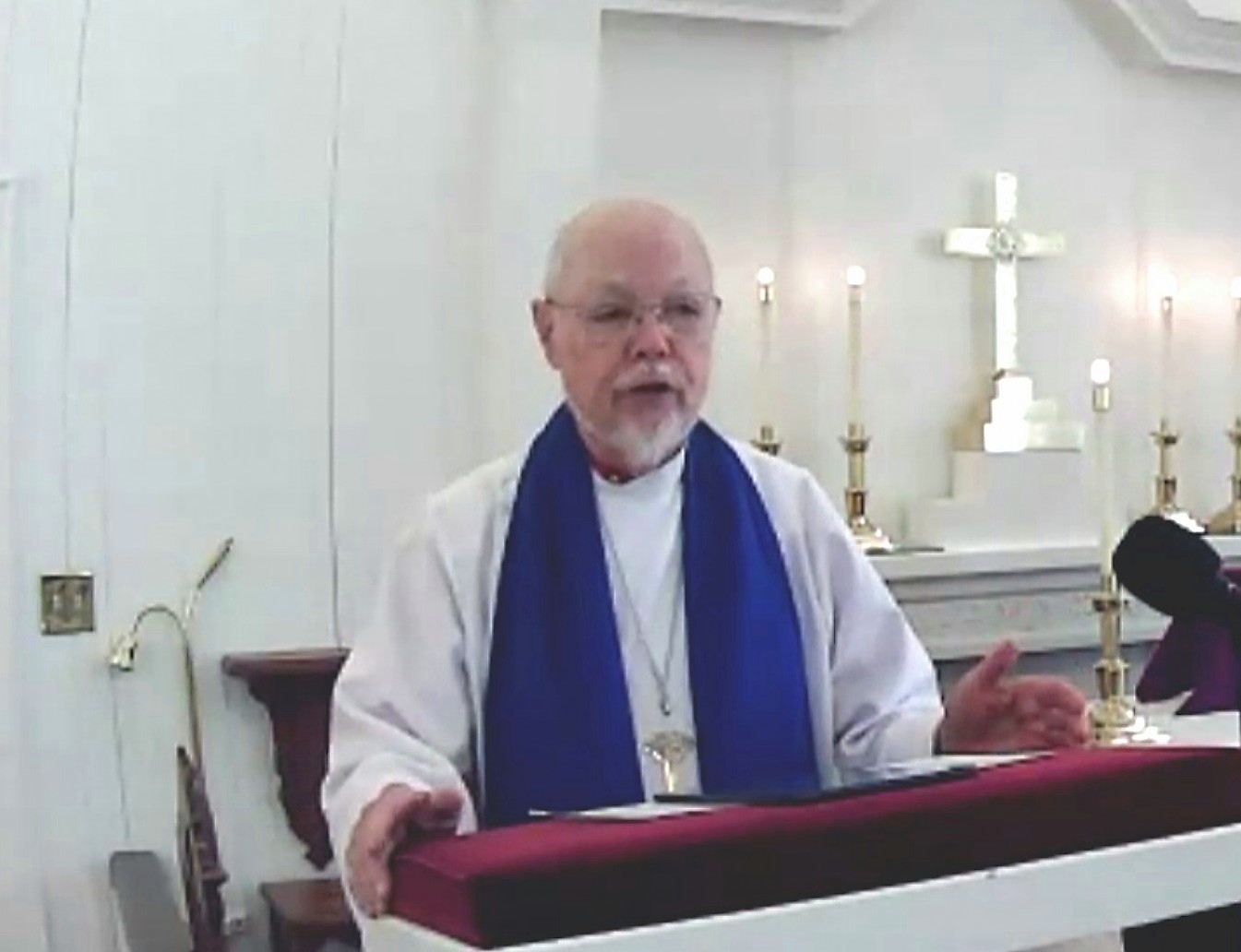
What does it truly mean to walk through the wilderness — and why does God sometimes lead us there? In this rich and searching sermon for the First Sunday in Lent, James A. Hackney, LLP takes us into the heart of Matthew 4:1-11, the account of Jesus' temptation in the wilderness, and draws from it a vision of Lent that is far more than giving things up or dreading extra church services.
This sermon was delivered at Zion Episcopal Church on February 22, 2026. Read the full text below to be encouraged and challenged as you begin this holy season of Lent.
Sermon: "The Wilderness"
Lectionary A, 1st Sunday in Lent — Matthew 4:1-11
Zion Episcopal Church — February 22, 2026
By James A. Hackney, LLP
In the name of the Risen Christ. Amen.
Today is the first Sunday in Lent. When I was twelve years old or so, I dreaded the coming of Lent. There were two reasons. The first was that I was singing in the Junior Choir at St. Peter's Church here in Washington. St. Peter's held a Lenten service in the chapel each Monday, Wednesday and Friday afternoon during Lent, and the Junior Choir sang at those services. That meant missing playing with friends after school three days a week for six weeks, just as the weather was getting nice in the spring. The other reason was that it was mandatory in our family to give up something for Lent, usually something to eat or do that we particularly enjoyed. That indulgence changed from year to year, but whatever it was, we dreaded giving it up. I remember wondering, "what is the big deal about Lent?" Truth be known, that is a question that a lot of people still ask.
One of the hymns that our Junior Choir sang during those Lenten services was "Forty Days and Forty Nights", which was based on today's Gospel lesson from Matthew. Curiously, those forty days were at the beginning of Jesus' ministry, immediately after his baptism, not at the end, near the time of his crucifixion. As I was studying for the preparation of this sermon, I did a lot of introspection on the significance of this in the context of Lent. I think a key point here is not just the temptations of Jesus, but where they took place: in the wilderness.
Just prior to this passage in Matthew was the account of Jesus' baptism. The heavens opened, the Spirit descended like a dove, and the voice of the Father declared, "This is my Son, the Beloved, with whom I am well pleased." It was a moment of clarity, of affirmation, and joy. But then, immediately, Matthew tells us "Jesus was led up by the Spirit into the wilderness to be tempted by the devil." He fasted for forty days and forty nights, and he was probably as hungry and miserable as we would expect after this ordeal. This is a surprising event in scripture. Jesus does not wander accidentally into hardship in the wilderness. He is not driven there by desire or failure. He is led there by the Spirit of God.
In scripture, the wilderness is not just a place of geography. It is a place of testing, of stripping away, of encounter. Israel spent forty years in the wilderness learning who they were and whose they were. Moses met God in the wilderness. Elijah fled into the wilderness and heard the still small voice. And now, Jesus goes into the wilderness for forty days and forty nights to be tested.
The Three Temptations
The First Temptation: Physical
"If you are the Son of God, command these stones to become loaves of bread." The tempter uses Jesus' hunger to pose a subtle challenge: "If you are the Son of God." That question echoes the voice at the baptism. God has just declared that Jesus is his Son. Now the devil invites him to prove it – to take matters into his own hands. To use divine power to meet immediate need: hunger. Jesus responds with scripture: "One does not live by bread alone, but by every word that comes from the mouth of God."
The Second Temptation: Demonstration of Power
"If you are the Son of God, throw yourself down" from the pinnacle of the temple and let the angels bear you up. We hear that challenge again: "If you are the Son of God." Jesus responds by quoting Deuteronomy: "Do not put the Lord your God to the test."
The Third Temptation: Possession
"I will give you all the kingdoms of the world and their splendor if you will fall down and worship me." Jesus answers with his most profound response: "Worship the Lord your God and serve only him." Matthew's Gospel says "then the devil left him", but Luke's Gospel adds a bit more. Luke says the devil "departed from him until an opportune time." The temptations of Jesus didn't end in the forty days after his baptism. The devil lay in wait for opportune times for the rest of his life. And scripture is telling us that the devil is lying in wait for an opportune time for us, too.
Lent as Our Own Wilderness Season
Our Lenten season reflects those forty days and nights of Jesus into our own lives. Lent is our own wilderness season. It is not a time of punishment. It is a time when the Spirit leads us into honesty, into self-examination, and into deeper trust. It leads us into the testing of what we truly believe. It is a journey of faith. This faith journey is not manipulation or trial. It is one that clarifies how we should live.
Lent also reminds us that the timing of our wilderness interludes matter. Temptation rarely comes when we are strong, well-rested and spiritually alert. It comes when we are tired or anxious. When we are hungry – for food, or perhaps for approval, for control or for security. Then comes the temptation to sin. We can also be tempted to bargain with God. How often do we say, perhaps silently, "God, if you are really there, do this for me"? How often do we bargain, "If you fix this situation, then I will believe more deeply"? How often do we long for dramatic signs rather than live quietly faithful? The temptation here is to turn God into a tool for our own security and accomplishment. If we demand that God prove himself on our terms, it is not faith; it is pride disguised as belief.
Lent tells us that, just as Jesus resisted temptation, we need to do the same. Jesus ended his temptations with the message, "Worship the Lord your God and serve only him." And there it is, the heart of the matter. Lent is about worship!
What This Season Calls Us to Do
So, what is our lesson today telling us to do? It tells us, first, to examine our worship. Whom do we serve? What claims our loyalty? What promises security if only we give it our allegiance? For some, it is comfort. For others, reputation. For others political power, wealth, or control over circumstances. The wilderness exposes our idols. But Lent gently, but firmly, asks us to turn again toward God alone, and to worship only Him.
Lent also tells us to ground ourselves in Scripture. Jesus does not argue creatively with the tempter. He stands on the Word of God. In moments of testing, he reaches into the deep well of Scripture that has shaped his life. Lent calls us to immerse ourselves in that same Word, as nourishment for our own faith. When doubts whisper, when fears arise, when temptation suggests shortcuts, we need a story larger than our own self. We need the language of trust: the Bible.
Finally, this passage tells something profoundly hopeful: Jesus has gone before us. He did not stand at a distance and command us to resist temptation by ourselves. Jesus faced hunger; he faced doubt; he faced the seduction of power. He knows the wilderness from the inside. And he emerged – not triumphant in spectacle, but steadfast in obedience. Matthew tells us the wilderness is real, the struggle is real, but so are God's love and care.
Lent asks us not merely to admire Jesus' resistance to temptation, but to follow him. To choose trust when we are hungry for control. To choose quiet faithfulness over dramatic display. To choose worship of God over allegiance to lesser powers or things. The wilderness is not a detour from discipleship. It is part of it. We enter the wilderness as beloved children, and in it we learn again what it means to live by every Word that comes from the mouth of God.
May this Lent be for us, not a season of bitter struggle, but a season of deepening trust. May we discover what truly sustains us. And may we emerge from our wilderness, like Jesus, ready to serve God.
In the name of the Father, and of the Son, and of the Holy Spirit. Amen.