




 Loading...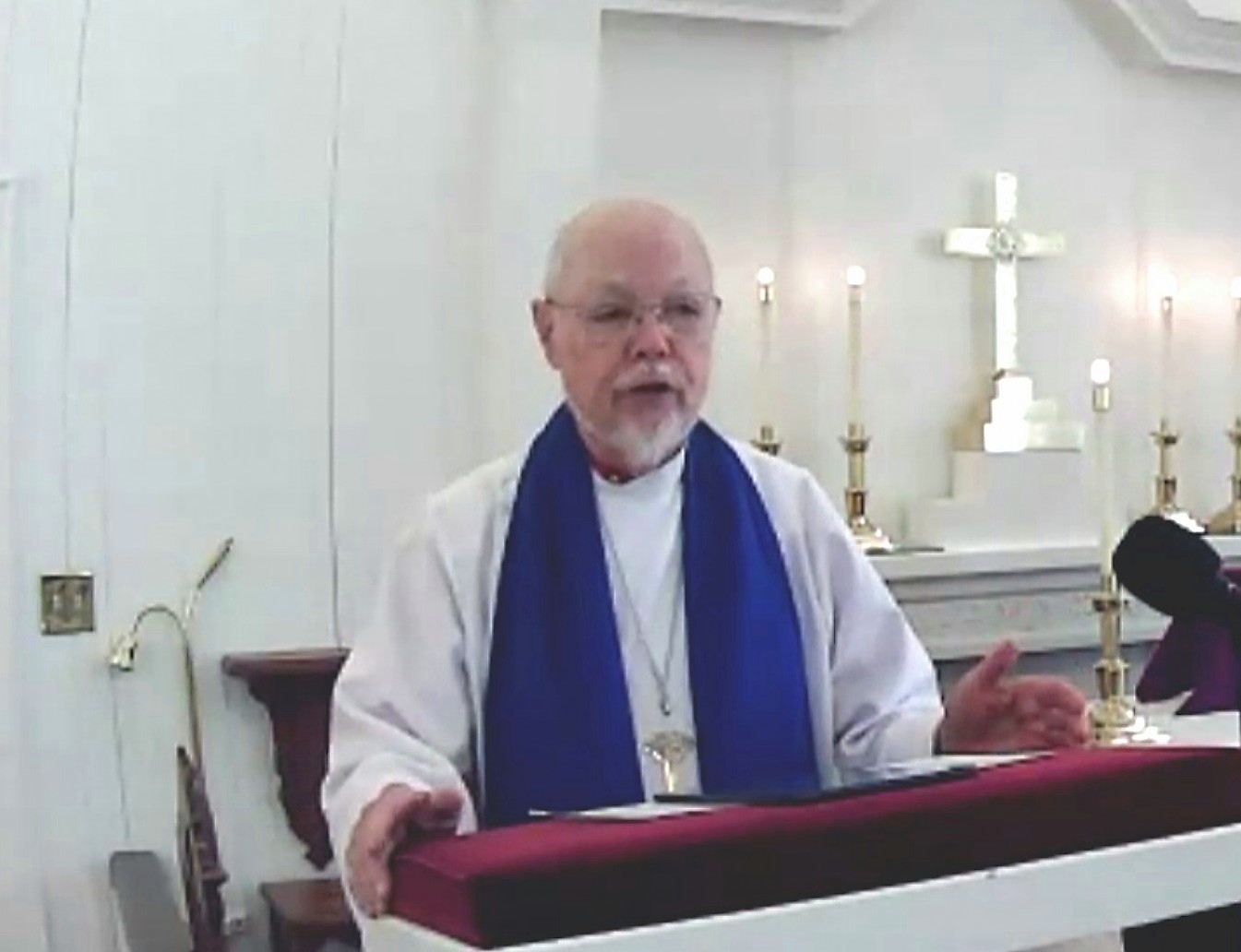
What happens when the most unlikely person becomes the most powerful witness? In this moving Lenten sermon delivered at Zion Episcopal Church on March 8, 2026, James A. Hackney, LLP draws from the rich Gospel account of John 4:5-42 — Jesus and the Samaritan woman at the well — to offer a message that is as timely as it is timeless. With warmth and storytelling rooted right here in Eastern North Carolina, Hackney opens with a local tale of a woman marked by her past who finds unexpected welcome, then guides us to the ancient well where Jesus meets another such woman and changes everything.
This sermon is a beautiful companion for anyone walking through Lent carrying thirst, shame, or a complicated history. It calls us to come honestly to Christ, to see others with new eyes, and to trust that our own quiet testimony — however imperfect — can open doors of faith. The well is still here. The living water is still being offered. Come and see.
Sermon – Lectionary A, 3rd Lent, John 4:5-42
Zion Episcopal Church — March 8, 2026
By James A. Hackney, LLP
In the name of the Risen Christ. Amen.
"At the Well"
As I was reading today's Gospel lesson, I remembered an Eastern North Carolina story I heard many years ago about a small country store, down a dusty road, far out in the farm country of Coastal Carolina. It was a kind of unofficial headquarters for the residents of the area. The store had one of those old wooden benches out front. Most mornings, a few of the area's older men would gather there with their cups of coffee, talking about crops, the weather, and their aches and pains. There was a woman who lived nearby who evidently had what we used to call "a reputation". She never came in the mornings when the men were there. She would shop at the store in the afternoon when no one else was around. She said very little, paid for what she needed, and left quickly. Whatever had happened in her past had marked her, so she lived her life quietly and alone.
One day a new pastor arrived at a church in the area. He had not yet heard all the local stories. One afternoon when not much was going on, he happened to be sitting outside the store drinking a soda when the woman arrived to do her shopping. She walked up and froze when she saw him on the bench. He smiled and said, "It's a hot one today. Would you like to sit for a moment?". She hesitated. No one had ever invited her to sit on that bench before. That simple invitation began a conversation that, over the days and weeks to come, changed her life. In this morning's Gospel from John, we meet another woman who comes to a well at noon and has her life changed. And maybe it will change ours.
Jesus Goes Through Samaria
In the verses before our scripture today, John says that Jesus left Judea and started back to Galilee, "but he had to go through Samaria." That is a bit curious. Most Jews would go the long way around to avoid Samaria. There was long-standing hostility between Jews and Samaritans – religious differences and old wounds passed down through generations. But Jesus goes through Samaria. He comes to a town called Sychar. It is about noon, the hottest part of the day. The disciples go into town to buy food, and Jesus sits down by Jacob's well. Then a Samaritan woman comes to draw water. Notice again the time: noon. Most women came in the cool of the morning or evening. You did not carry heavy water jars in the blazing heat unless you had a reason. Perhaps she, too, was avoiding people. Then Jesus does something unexpected: he speaks to her! "Give me a drink," he says.
In that simple request, Jesus crosses several boundaries. He is a Jew speaking to a Samaritan. He is a man speaking publicly to a woman. And he is asking to share a drinking vessel. All of that would have raised eyebrows. The woman is understandably startled. "How is it that you, a Jew, asks a drink of me, a woman of Samaria?" Jesus answers her, not with an argument, but with an invitation, "If you knew the gift of God, and who it is that" is asking you for a drink, "you would have asked him, and he would have given you, living water".
The woman misunderstands him at first. She thinks he is offering easier water, water that means she will not have to keep coming back to the well. But Jesus explains:
"Everyone who drinks of this [well] water will be thirsty again, but those who drink of the water that I will give them will never be thirsty. The water that I will give, will become in them a spring of water gushing up to eternal life."
Truly Seen, and Not Rejected
Then comes a conversation between Jesus and the woman about her husbands. She has had five husbands and is now living with a man to whom she is not married. Now we discover why the woman comes to the well at noon: to avoid being scorned by others. But Jesus does not scold her, he simply speaks the truth. He sees her as she is and doesn't turn away. At this well, at this moment, she is truly seen for the first time, and not rejected.
The woman then shifts the conversation to religion: "Sir, I see that you are a prophet. Our ancestors worshiped on this mountain, but you say that the place where people must worship is in Jerusalem." It is an old argument between the Jews and the Samaritans. Which place is right? Which tradition is correct? Jesus replies, "the hour is coming, and is now here, when the true worshipers will worship the Father in spirit and truth." Jesus is telling her, and us, that worship is not ultimately about this mountain or that temple. It is about the heart. Jesus reminds us that God is not confined to a building or a place. God meets us in the sanctuary – and at the kitchen table, in hospital rooms, and at lonely water wells at noon.
The Clearest Declaration
The woman speaks of the coming Messiah. And Jesus says plainly, "I am he, the one who is speaking to you." Here, in John's Gospel, we see one of the clearest declarations of who Jesus is, and it is spoken – not to a religious leader – but to a Samaritan woman with a complicated past. Isn't that just like God? Throughout scripture, God chooses unlikely messengers: shepherds, fishermen, tax collectors, persecutors turned apostles. And here, Jesus reveals himself first in Samaria to someone the world had written off.
Then something wonderful happens. The woman left her water jar and went back to the city. She said to the people, "Come and see a man who told me everything I have ever done! He cannot be the Messiah, can he?" John tells us that people left the city to see him. Many from the city believed in Jesus because of the woman's testimony, and many more believed because of his word. It is significant, though, that her testimony opened the door. The one who avoided people at noon now stands before them as a witness.
What This Story Means for Us
What does this story mean for us? We may sometimes feel as though we are coming to the well quietly, not wanting to trouble anyone with our thirst. But here is the good news: Jesus still meets people at wells at noon. He meets us in our tiredness, our thirst, and our complicated histories. He is not afraid of our past. He knows the truth – and loves us still. That is the heart of Lent. Lent is not about rehearsing our failures. It is about bringing our thirst to the One who can satisfy it. When Jesus speaks of living water, he is speaking of a deep, steady spring beneath the surface of our lives – a spring of forgiveness, hope and peace.
So, what then is Jesus calling us to do in return?
- Come to him honestly. The woman told the truth as she could, and Jesus met her there. We, also, are invited to come honestly—in prayer, in confession, at this table—bearing all, and receiving grace.
- See others differently. Jesus crossed boundaries. He spoke to someone others avoided. Who in our lives might be sitting alone at the well? Jesus calls on us to embrace them as brothers and sisters with love and without judgment.
- Witness. The Samaritan woman was not a scholar. She simply said, "Come and see." We have our own stories of God's faithfulness — through illness, loss, change, and uncertainty. Don't underestimate the power of those stories! Our testimony may be quiet, but it is real, and it will make a difference.
The Well Is Still Here
In the end, the image that stays with me is this: the Savior, sitting by a well, waiting. Waiting for a woman who thought she was coming for water. Waiting for a conversation that would ripple through a village. Waiting, even now, for us.
The well is still here. The thirst is still real. And the living water is still being offered. So, this Lent, let us come to the well. Let us lay down our water jars—our shame, our self-protection, and our pride. Let us receive the living water of Christ's grace. And then, refreshed and renewed, let us go into our homes and our little corner of the world and say, with quiet joy, "Come and see."
In the name of the Father, and of the Son, and of the Holy Spirit. Amen.